Mold Removal in Rancho Santa Fe, CA
Rancho Santa Fe is an unincorporated village of eucalyptus-lined roads and large lots southwest of Escondido, planned in the 1920s by the Santa Fe Railway's land company with architect Lilian Rice drawing the Spanish Colonial Revival houses that still set the style. Behind the 1920s and 1930s originals sit decades of estate homes, many from the 1970s through the 2000s, on acreage with guest houses, pool equipment rooms, and long runs of pipe from the meter.
A house this size hides water well. A guest wing nobody enters for a season, a pool-equipment room with a leaking heater, a flat-roofed section with a clogged scupper, or a wine room with its own cooling unit can all stay wet for months. The 2024 storms found the flat roofs and the long valleys in the tile.
From Rancho Santa Fe, the call goes to an independent local provider who does mold removal and remediation. The provider's first visit is a meter reading and a written scope. Nothing beyond the connection is ours.
Rancho Santa Fe mold removal in a 1920s adobe and a 1990s estate
A plaster wall in an early Covenant house wet from a galvanized line is mold removal, and the crew works with lath and plaster rather than drywall. A sour smell from the vents of one zone of a large system is HVAC mold cleaning. Water across several rooms of a guest wing is whole-home mold remediation.
The Covenant's design review and the permit that still runs through the county
Exterior changes inside the Covenant pass through the Rancho Santa Fe Association's art jury, which rarely touches an interior drywall repair but matters if the damage reached stucco, a window, or a roof. The building permit itself is a San Diego County permit, since the village is unincorporated, and the provider handles both steps.
Call (760) 546-5839 and tell us what you see. We connect Rancho Santa Fe homeowners with a local mold provider in one call.
Services Available in Rancho Santa Fe
Mold Removal
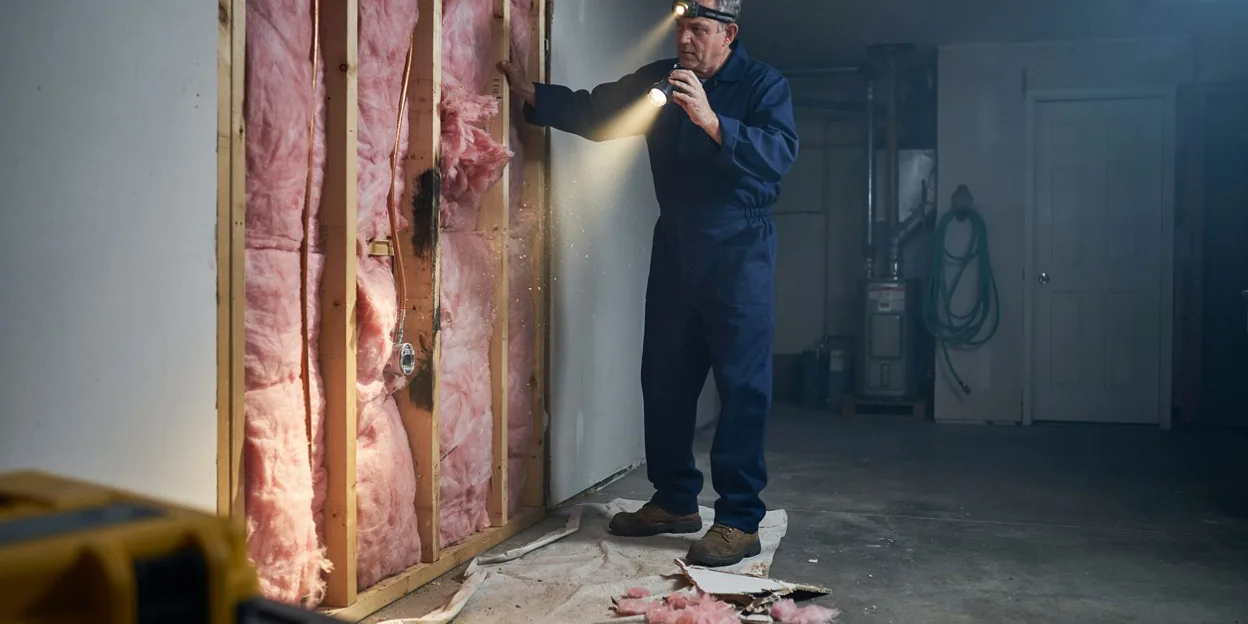
Growth on drywall after a slab leak, a water heater, or a fridge line: room sealed, wet board cut to the meter mark, framing HEPA-cleaned and dried.
Black Mold Removal
A dark patch worked by how far the water went, not by its color: containment up, porous material out, hard surfaces cleaned, leak fixed before closing.
Whole-Home Mold Remediation
A slab leak or a storm that soaked several rooms at once, mapped wall by wall and cleared in zones as one job with one scope.
HVAC Mold Cleaning
Coil, drain pan, and condensate line cleaned or swapped when the attic or closet air handler sweats through a 100-degree Escondido summer.
Bathroom Mold Removal
Growth behind a vanity, under a shower pan, or on a ceiling with no fan, removed once the supply or drain leak feeding it is fixed.
Attic Mold Remediation
Growth on roof sheathing under cracked tile underlayment or beside a sweating duct, cleaned and treated after the roof or the duct is fixed.
Mold Odor Removal
A musty smell in a house that looks fine, traced to wet material under the laminate or behind a cabinet, then removed and treated.
Mold Damage Repair
Drywall, texture, baseboard, and cabinet bottoms put back after removal, once the slab reads dry and the leak is repaired.